
What do we do, now? Keep paying a “never touched” premium to dealers who have learned the way to have their watches perfectly restored for a fraction of that? Or finally learn our own standards and go by those? Is it worth paying other people who will charge us money to tell us NOT to buy based on easily obtainable, public evidence – as that’s the easiest way to make profit at zero risk with zero investment – while exposing us to the same chances of buying a re-polished watch because they couldn’t tell themselves themselves anyway?
Or should we maybe finally accept the fact that what makes a watch truly valuable is its beauty, it’s perfect balance between original condition, organic aging and reasonable wear and tear for the life it has lived, over half a century or more, with no VISIBLE signs of bad restoration attempts to corrupt the picture? Because this is what we are really buying most of the time. And when the unquestionable, history proven, “virgin” condition of a watch is truly available, are we willing to pay the real price, which is three, four or more times the average market? And, do we even need to?
“Let’s stop asking questions the answers to which we would risk using against our own interest anyway; let’s stop allowing dishonest people to make profits by simply lying to our face; let’s stop paying last minute experts a fee for telling us things we could easily figure out by ourselves, as if they made a real difference anyway.”
Conclusion.
With the advent of “preservation” as the new standard, restoration too has changed gear to a point that today’s results were unthinkable just a few years ago. In the meantime, the general public has only come to understand that a “polished case” is bad, even if just because back in the day “re-polished” meant a violated, vandalized case, awful to look at, even though today that’s really not the case any longer. How does that affect the market? Well, in the first place asking “has the watch been polished?” is likely to possibly provide the enquirer either with a lie or an incorrect answer, unless the watch has been polished by the very person who is offering it, in which case he would know: because in most cases it’s just simply impossible to tell. So, if you really care to know what you are buying, much smarter
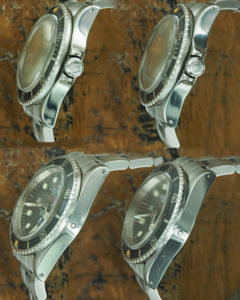
questions would be: “does this watch show evident signs of poor re-polishing work?”, or “what quality score would you give the case on a 1 to 100 scale?”, and “is there any visible restoration attempt that corrupts the watch’s original condition?”. Questions that will more likely get a true answer on which a wise decision can be made. And if somebody tries to sell you the idea that they can tell if a case has been re-polished based on millimeters or milligrams differences, they’re just blowing smoke up your ass: a modern, electronic, numerically controlled milling machine has a tolerance of plus or minus 0,2% for a total potential difference in size of two different examples of the exact same finished product of a 0,4%.
Imagine what are the odds that hand finished parts, cut with analogically operated machinery at least half a century older could deliver anything even close to that “non” precision.
So here’s the deal: let’s stop asking questions the answers to which we would risk using against our own interest anyway; let’s stop allowing dishonest people to make profits by simply lying to our face; let’s stop paying last minute experts a fee for telling us things we could easily figure out by ourselves, if they only made a real difference anyway; let’s start instead developing a personal sensitivity that can finally allow us to make our own decisions, guarantee us that we will love what we are buying and, if we don’t feel technically and professionally prepared to make such decisions on our own, have the humility to go out there and trust a supplier who has the experience, knowledge and taste to make the best possible decision for us.
You guessed it, just like we do when we choose our doctor, interior designer or attorney.
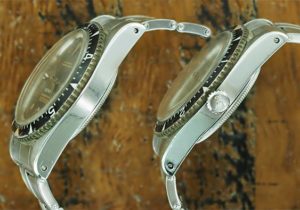
Don’t trust blindly those who will always tell you what you like to hear, but try to appreciate and understand the truth. You will find herds of bottom feeders who will volunteer criticizing whatever you are offered from other dealers, and that for sure will protect you from making a bad deal or two. But they will never compensate you for all the good deals they will make you miss either, and that could be just as big, if not bigger, damage; instead, there are a few truly experienced dealers with their own – not yours – skin in the game, who have the experience and knowledge to walk you safely through a true extraordinary experience and, should they ever make a mistake, will not hesitate to own it and stand by it. If you don’t feel confident enough to choose the right watch for you, just try to wisely choose the right dealer: learn about his history, his reputation, his publications – if any – and ask him to help you understand your watch and investment with clarity, standing to his proven experience and not a bunch of controversial information based on online hearsay. Check out what his return policy is, and ask around if he’s known to truly keep his promises.
We’ve gone through the phases of watches that would sell only when well re-polished; then, only if with box and papers; then, only if with a “tropical” dial; now, only if “never polished”: what next? Are we ever going to consider watches that just look great enough and that’s it? And by the way, if you are looking at the photos I attached to this post and don’t really see a difference between the properly polished watches and the untouched ones, well…that’s what I’m getting at.

BRAVO!!! 👏 Well said, I could not agree more. I will never forget about a beautiful unpolished stainless steel Patek reference 96 that I sold to a dealer. Sometime later I saw the same watch on someone’s arm and was saddened to see that it had been horribly polished! The new owner commented to me proudly “I had it shined up.”. I think part of the trend towards unpolished watches is because of all of the people that had poorly polished watches. A watch that is correctly polished requires specialized equipment and proper training and experience. Many watches were polished by a monkey and a buffing wheel. Most people years ago had never even heard of a lapping machine. “The only substitute for knowledge is money.”
Thank you for your comments, Bruce!
Buongiorno, la forza della verità e del buonsenso non ha bisogno di coraggio per essere trasmessa a noi “parvenue” che dobbiamo solo avere l’intelligenza di scegliere un fornitore, competente professionalmente ed onesto intellettualmente, e crescere piano piano con lui con la consapevolezza di cogliere solo parzialmente la complessità di un orologio vintage.
Mi presento come “Speedmaster pre moon” e “Tudor pre 79090” fan.
Peccato siamo così lontani, quante cose da imparare da una persona che si può permettere di essere così schietta!!
Cordialità,
Ferruccio Riccio
Napoli Italia
Fascinating read. Really interesting thank you
Thank you for taking the time!
Thank you for checking in.
Very accurate, and 100 % true.
Most buyers need to use the expertise of someone like you to build a collection.There is nothing wrong to buy watches from honest dealers,you pay more but you get what you pay for.
And the best part is guarantee by your Dealer.
Specially today is very important to buy from a dealer that can come up with the money back.(considering prices of vintage daytonas or subs and gmt’s Pateks and Audemars.)
Some dealers out there don’t have the money to pay you back since in the first place they don’t even own the watches they sell and if the seller that gave them the watch in consignment is not honorable then those dealers can’t afford to give you your money back.
Today all this new dealers who start
their selling speech with this watch is from first owner Bla bla,most of the times they are not telling you the true.And today every Tom and Harry is a watch expert and dealer.
The vintage watch business is like any other business you need to work very hard and handle lots of watches
to learn.Like you say, you can’t learn this trade by looking at watches on line or reading books only.
Thank you Alex for giving all of us a lesson on vintage watches.👍👍👍
Your are one of the Honest one’s in this business.keep it up.!!!